

Bridal Hair Trial Checklist: Everything You Need Before Your Appointment
Your wedding hair trial is more than a quick test run. It is your chance to see how your chosen style looks, feels, photographs, and holds up before one of the most photographed days of your life.
If you are booking a Portsmouth NH mobile hair salon, meeting with a wedding hair stylist in Portsmouth NH, or working with a professional event hairstylist, showing up prepared can make your trial far more productive. The right preparation helps your stylist understand your vision, spot potential problems early, and create a look that feels polished without feeling unlike you.
This checklist covers what to bring, how to prepare your hair, what to discuss during the appointment, and how to decide whether your trial look is truly wedding-day ready.
1. Gather Your Hair Inspiration Before the Trial
A bridal hair trial works best when you arrive with a clear direction. You do not need to know the exact hairstyle you want, but you should have enough inspiration to show your stylist what catches your eye.
Save several photos before your appointment. Look for styles with hair length, texture, density, and color that are somewhat similar to yours. A loose blonde updo can look very different on dark hair, while a full braided style may require more volume than your natural hair provides.
Bring inspiration that shows:
The overall hairstyle you like
Front and side views when possible
How much volume you prefer
Loose, polished, romantic, or textured finishes
Bang or face-framing preferences
Veil or accessory placement
Styles you definitely do not want
Try not to bring 20 completely different looks. Three to five strong references usually give your stylist a better sense of your taste without creating confusion.
It also helps to explain why you like each photo. Maybe you love the softness around the face but not the bun. Perhaps you like the volume but want fewer loose pieces. Those details give your stylist far more useful direction than simply saying, “I like this.”
2. Prepare Your Hair the Right Way
How you prepare your hair can affect the accuracy of your trial.
Unless your stylist gives you different instructions, arrive with clean, completely dry hair. Avoid loading it with heavy oils, masks, leave-in conditioners, or styling products that may make the hair too slippery to work with.
Your stylist may recommend washing your hair the night before instead of the morning of your appointment, especially if your hair is very fine or soft. Follow their specific advice whenever possible.
You should also avoid making major hair changes right before the trial. A dramatic haircut, new bangs, or a significant color change can alter how your chosen style behaves and photographs.
Before your appointment, let your stylist know if you have:
Hair extensions
Very fine or thinning hair
Extremely thick hair
Naturally curly or textured hair
Recent chemical treatments
Scalp sensitivity
Concerns about pins or tight hairstyles
These details help your stylist plan the correct products, tools, and techniques.
If you expect to wear extensions on your wedding day, bring them to your trial. Testing the hairstyle without them may give you an unrealistic idea of the final result.
3. Bring Your Wedding Accessories and Outfit Details
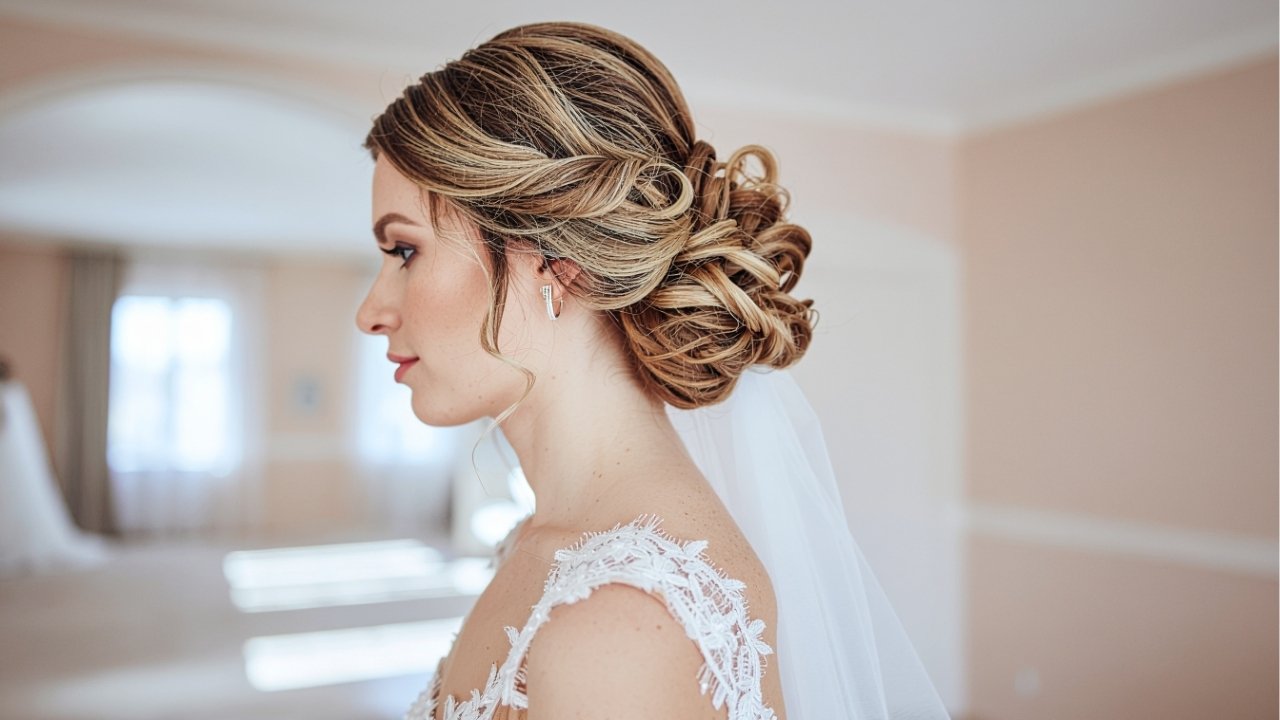
Your hairstyle does not exist in isolation. It needs to work with your dress, neckline, veil, jewelry, and overall wedding style.
Bring your veil if you already have it. If you plan to wear a comb, pins, flowers, headband, tiara, or another accessory, bring those as well.
You should also show your stylist a photo of your wedding dress.
A high neckline, open back, strapless gown, or heavily detailed bodice may influence whether your hair looks better up, down, or partially pinned.
Consider bringing:
Your veil
Hair accessories
Earrings
A photo of your wedding dress
A photo of your makeup inspiration
Any hair extensions you plan to wear
A top with a neckline similar to your dress
These small details can make the trial much more realistic.
Take plenty of photos once your style is finished. Photograph the front, both sides, and the back. Step into natural light if possible. A style can look beautiful in the mirror but appear flatter, messier, or more severe in photos.
4. Test Comfort, Movement, and Staying Power
A bridal hairstyle should look beautiful, but it also needs to survive several hours of movement, hugs, photos, dancing, weather, and possibly a veil.
Do not judge your trial only during the first five minutes.
Wear the hairstyle for a few hours afterward whenever possible. Pay attention to whether pins begin to hurt, curls fall quickly, loose pieces become distracting, or the style starts feeling too heavy.
Ask yourself:
Does this still look like me?
Can I comfortably turn my head?
Are any pins pulling?
Does the hairstyle feel secure?
Does it work from every angle?
Will it hold up during photos and dancing?
Does the front look flattering in pictures?
Can the veil be removed without ruining the style?
Tell your stylist what feels uncomfortable. Bridal hair often requires stronger support than an everyday hairstyle, but it should not leave you with a headache before the ceremony even begins.
This is also the time to test possible adjustments. You may discover that slightly less volume looks better, a lower bun suits your dress, or softer pieces around the face photograph more naturally.
Short Case Study: Why the Trial Matters
One bride initially chose a very polished high bun after saving similar styles for months. During her trial, however, she realized the height felt too formal with her relaxed outdoor wedding and made her feel unlike herself. Her stylist lowered the bun, added softer texture, and left a few controlled pieces around the face. They also tested her veil placement and photographed the style outside. The revised version immediately felt more natural. Because those adjustments happened weeks before the wedding, there was no last-minute uncertainty. On the wedding morning, both bride and stylist already knew exactly what would work.
Questions to Ask During Your Bridal Hair Trial
Your trial is also the perfect time to confirm wedding-day logistics.
Before leaving, ask your stylist about timing, preparation, scheduling, and what happens on the wedding morning.
Important questions include:
When should I wash my hair before the wedding?
Should I straighten or blow-dry it beforehand?
How long will my wedding hairstyle take?
When should hair services begin?
How should bridesmaids prepare their hair?
Should everyone arrive with completely dry hair?
Will you provide pins and styling products?
How should I remove my veil without damaging the hairstyle?
What happens if the weather is humid, rainy, or windy?
Should I bring a small touch-up kit?
Write down the answers or save them in your wedding planning notes. You will have plenty to think about as your wedding gets closer, and small preparation details are easy to forget.
Your Final Bridal Hair Trial Checklist
Before your appointment, make sure you have:
Three to five hairstyle inspiration photos
A photo of your wedding dress
Your veil
Hair accessories
Earrings or statement jewelry
Hair extensions, if applicable
Clean, dry hair prepared according to your stylist's instructions
Notes about your wedding location and schedule
Photos of your makeup inspiration
A list of questions for your stylist
Enough time afterward to test how the hairstyle wears
Most importantly, arrive willing to make adjustments.
Your favorite Pinterest hairstyle may not be the style that makes you feel your best. A good trial gives you room to experiment until you find the right balance between inspiration, comfort, your hair type, and your wedding-day look.
Walk Into Your Wedding Morning With Confidence
Your bridal hair trial should remove uncertainty, not create more of it. When you prepare properly, communicate clearly, and test the finished style in real conditions, you can walk into your wedding morning knowing exactly how your hair will look and feel.
Schedule your bridal hair trial early enough to make adjustments, test accessories, and finalize every detail before the big day.